Most outbound sourcing fails before the first message ever lands, because it was built around volume instead of relevance. You can send 200 LinkedIn messages a week and still hear nothing back, while a recruiter sending 20 well-built ones fills the role first.
Why most sourcing sequences go unanswered
The standard sourcing sequence is one message, sometimes a generic follow-up, and then silence when nothing happens. It treats outreach like a broadcast instead of a conversation, which is exactly how a passive candidate, someone not actively job hunting, reads it. They are not ignoring you on purpose. They are filtering out something that looks like every other message already sitting in their inbox.
A sequence that gets replies is built differently from the start. It assumes the first message will not land with everyone, plans for that, and gives each candidate more than one well-timed, specifically different reason to respond.
The four touchpoints that actually work
A reply-generating sequence is not longer, it is more deliberate. Four touchpoints, spaced correctly, each doing a distinct job:
- Touchpoint one, day one. Specific and short. Names one real thing from the candidate’s background, states the role in one line, and asks a low-friction question. No company history, no culture deck.
- Touchpoint two, day four. A different angle entirely, not a nudge. If touchpoint one led with the work, touchpoint two leads with team, growth, or autonomy. Candidates who ignore the first hook sometimes answer the second.
- Touchpoint three, day nine. Social proof in one sentence. A real outcome, a real team detail, something concrete enough that it could not be copy and pasted into a message about a different role.
- Touchpoint four, day fifteen. The permission-to-close message. Direct about this being the last outreach, and it consistently produces some of the highest reply rates in the whole sequence, because it removes the pressure to respond immediately.
Each message should be readable in under fifteen seconds. If a candidate has to work to figure out what you are asking, they will not answer.
What makes message one actually get opened
The first touchpoint carries the most weight, and it fails for one of three reasons almost every time.
It is too long. Three paragraphs before the ask buries the one sentence that mattered. It is too generic, referencing a job title or industry instead of something specific to that person’s actual background. Or it asks for too much, requesting a call or a resume before the candidate has any reason to trust you.
A message that works does three things in under 80 words: names something specific and real from the candidate’s profile, states what the opportunity is in one line, and asks a question that takes ten seconds to answer, not a meeting that takes thirty minutes.
Building the sequence so it runs without you remembering
The sequence only works if it actually runs on schedule, and that is where most recruiters lose it, not in the writing. A simple tracking structure solves this:
- Log the candidate’s name, role, and day one send date.
- Set automatic reminders or scheduled sends for days four, nine, and fifteen.
- Mark each touchpoint sent, opened if visible, and replied.
- Flag any candidate who replies at any stage for immediate follow up within one business day, since speed at that point matters more than the message itself.
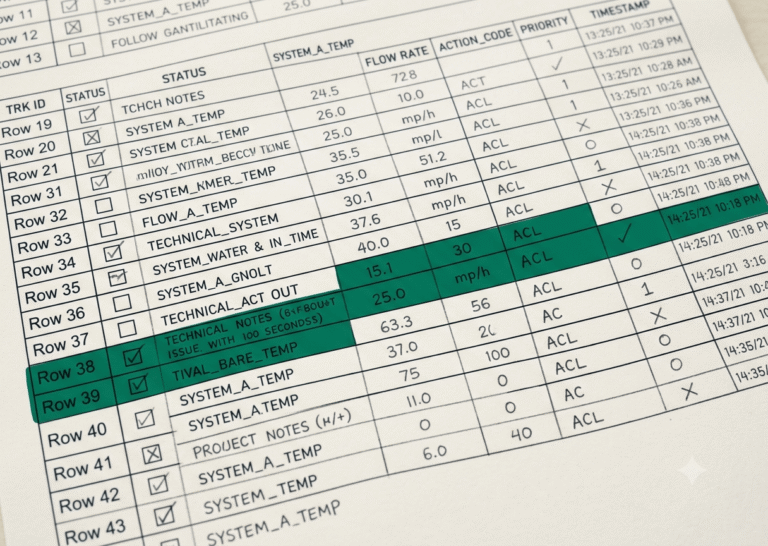
A spreadsheet with these four columns, built once, handles this for an entire requisition without anyone needing to remember which candidate is on which day.
From chasing replies to running a system
Most hiring teams are stuck rebuilding this sequence from memory every time a new requisition opens, which is why outreach quality drops the moment things get busy. The structure above works whether you are sourcing for one role or ten, but only if someone is actually maintaining the cadence and tracking who is where in the sequence.
This is one of the tools built into The Persiva Method, ready to use without building it yourself.